Have you ever weighed yourself after weeks of dieting only to wonder why you haven't lost more weight? You stuck to the food on the list you gave yourself (or were given) and yet the scales are firmly stuck higher than you expected. It can be so disappointing and frustrating.
There can be many reasons that you don't loose weight as fast as you would like and one of those reasons can be hidden calories.
For example you may decide to get a take-away lunch at a well known chain that offers long bread rolls filled with meat, cheese and salad. They even display the low calorie options to help you choose your lunch. You choose chicken, avoid the cheese, have lots of salad and believe that you are doing really well. And then you choose a low fat dressing but what you may not be aware of is the amount of sugar in that dressing. In this case it is the dressing that has the hidden calories.
Nearly all sauces and dressings have sugar in them. Next time you want a sauce or dressing from a bottle have a look at the label first. The way to avoid the hidden calories is to use mustard (but not American mustard) or to make your own dressings using olive oil and lemon juice or natural yoghurt (not low fat) and lime (or lemon) zest and juice. You can also add spices, herbs and vinegars except Balsamic which has a very high sugar content.
One of the other big contenders in the hidden calorie category is the nibble. It is quite astonishing just how many extra calories you can consume by nibbling. Do you nibble when you cook or if there is food out? How about that little snack on the way home from a long day at work or when you are doing the food shop? You often forget about them because you didn't consume the food as part of a meal or on a plate. You can consume over a third of your required calories through nibbling. Some people chew gum to prevent them nibbling. Others carry a bottle of water everywhere and sip on that. Try adding some mint leaves and cucumber slices, or a slice of lemon or lime to your water.
Enjoy becoming a detective of hidden calories and celebrate the change it brings to your weight management.
love
Sarah
Wednesday, 26 March 2014
Wednesday, 19 March 2014
Craving or addiction?
Have you ever wanted chocolate so badly that nothing else would do? Join the club. I suspect that you and I are not alone and that there are many women who have had the same experience, and have had this experience more than once.
Certain events seem to trigger this desire for chocolate including sudden stress, sudden hunger and 'that time of the month'. And then there are the days that there is no apparent or obvious reason. We just want chocolate.
I have been told by clients that they are addicted to chocolate and that whatever plan we create for them to follow must include some chocolate. Some of my clients are quite concerned that they could be addicted to chocolate.
How do you tell the difference between a craving and an addiction? Here are a few differences so that you can work out which one is you for difference foods and drinks. For example you may have cravings for cheese and be addicted to coffee. I recently met someone who has 7 - 8 cups a day.
- A craving causes you to be very focused on that one food and there is no substitute for that food. There are no signs and symptoms such as shaking, nausea or headaches, just a real desire to eat that food.
- When you eat that food it feels great and you feel very satisfied.
- An addiction means that you need that food and without it you experience a range of signs and symptoms. An example of this could be suddenly giving up coffee when you usually consume 8 cups a day. You will get headaches and other signs and symptoms.
- With an addiction the consumption of that food or drink item doesn't make you feel great, rather it makes you feel normal and cures the withdrawal symptoms that you were experiencing.
- With an addiction you require an increasing amount of that food or drink to feel normal. It is the same with drugs such as Morphine or Valium.
love
Sarah
Tuesday, 11 March 2014
Can alcohol help you sleep?
Alcohol has been used for centuries both for recreation and for medicinal purposes. I have a 1946 nursing dictionary that has a whole entry on the use of Brandy. It recommends Brandy for all ages for gastric ailments, shock and general malaise. It has the amounts to administer including the number of drops for new-born babies. And it that isn't enough to make your eyebrows rise up, it goes on to state that in cases of sudden collapse the Brandy should be administered by injection into the vein. Talk about a 'shot in the arm'.
Have you ever experienced a heavy lunch and several glasses of wine helping you snooze for an hour after lunch or at bedtime? Alcohol can make us sleepy and it can also make some people very active. It also diminishes inhibitions and insight, allowing people to think that they can dance like John Travolta and sing like Frank Sinatra. Karaoke bars are a shining example of this.
So how can it be that alcohol can make you sleepy and even help you get to sleep and yet can also prevent you from getting good sleep by waking you up several hours later?
When we sleep we go through several cycles of REM sleep and non-REM sleep. These cycles are very important and we need a minimum of 4 - 5 cycles every night for a restorative and restful night. When we are disturbed by noises such as a party next door, or due to illness or anxiety we miss out on several cycles and feel tired and fractious in the morning.
The consumption of alcohol increases the amount of non-REM sleep and reduces the number of full cycles. More than this it can also lead to nightmares or vivid dreams, sweating and multiple awakenings during the night. These negative effects can also be felt when alcohol is consumed in the late afternoon.
Alcohol may be able to help you get to sleep but it will then give you an interrupted and poor quality of sleep.
sweet dreams
Sarah
Tuesday, 4 March 2014
Sugar for stress
Have you ever noticed that when you are feeling stressed you want some chocolate or something sweet? Did you ever wonder why this happens or just take it for granted because it has always been like this?
Why do we reach for something sugary in times of stress? There are good biological and chemical reasons for it but because we are stressed so often in our modern society we end up reaching for something sweet nearly every day.
All our cells need glucose. Sweet foods contain one or more types of sugar and our body will convert these into the glucose for us. Except for fructose, which I have mentioned before. It converts fructose into fatty acids and this is then sent off to float in our blood vessels and eventually be stored as fat. More about fructose another day.
In the days of wooly mammoths and sabre tooth tigers the need for sugar to provide instant energy made sense. It gave the cave woman some time to find other food supplies such as berries and nuts, and the cave men time to hunt for meat and possibly fish.
When our brain is tired it will ask your body for more glucose and this is why we reach for sweet foods when we are tired. We also sometimes fancy sweet foods when we are ill, because our bodies are using our resources to help to heal us. When I worked as a nurse in the emergency department we often made shocked relatives cups of hot sweet tea. The heat helped to keep the circulation going, tea is both a stimulant and a relaxant and the sugar provided a hit of instant energy because shock causes the digestive system to shut down so that the body can provide all its resources to the vital organs and the muscles.
As children most of us were rewarded with a sweet treat for being 'brave' during something unpleasant which could range from an injection to having a broken limp fixed. Sweet drinks were on hand for flu, any amount of infections brought home from school and lollies and chocolates helped when your best friend turned nasty and went off with another girl from school. Add in hormones as we mature and pretty soon chocolate is becoming something that we can always rely on to get us through a tough moment or entire bad year.
The combination of being physically engineered to seek out sweet food, a brain that demands glucose when tired and a body that demands glucose under stress with a life time of being given sweet food as a treat or to make us feel better all leads to us turning to chocolates and lollies every time we feel tired, upset or stressed. And this doesn't include the times we use them to celebrate occasions and success.
Once you understand all the chemistry and natural desires of our body and brain plus conditioning it becomes easier to notice it when it happens and seek out alternatives.
Next time you are stressed you could try this 10 second stress reliever:
Place your hands together palm to palm and then curl your fingers over each other.
Breath in deeply and then quickly breath out deeply.
Do this 10 times.
Each time you do this raise one finger until you have raised all 10 fingers (and thumbs).
This uses up the adrenaline that we pump out when we become stressed so that don't feel so agitated and jumpy, which in turn reduces our need for sugar.
love
Sarah
Thursday, 27 February 2014
Dear Sarah - What is the best option at MacDonalds?
Years ago when I was staying with family friends in Canada, once a week one set of grandparents would come over and take their two young children out for lunch. Every week the grandparents would arrive and ask "Where do you want to go today?" and every week the children would yell out 'MacDonalds".
Most of us, or at least many of us, will for one reason or another end up in a fast food burger place. It may not have been our preferred choice, or maybe it was. But what ever the reason there may come a time when you need to know which is going to do the least damage to your figure.
I was asked this question a few days ago because the person in question has a daughter who is at an age when hanging out with friends in senior school often means hanging out in MacDonald's. This person wanted to know the better options for the teenage daughter because this group are in there quite a lot. One burger meal a month isn't a problem but several a week really could become a problem, especially if chips and drinks are also involved.
When eating out in fast food places the main tips are to avoid as much sugar as possible which usually means avoiding most sauces, all relishes and nearly all the drinks. It also means not having the additional sides or dessert, or at least avoiding these most of the time.
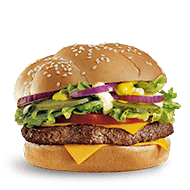
With reference to any fast food burger place the best option is usually a grilled chicken burger with lots of salad, no relish, a little mayo on a wholemeal bun. There are also chicken salads and again avoid the dressing unless it is only oil and vinegar. If beef is preferred then go for a burger that has lots of salad and no relish or sauce (or very little) or a burger that has a double patty because the protein will help to fill you up quicker and for longer. The buns contain sugar which keeps people hungry. There is a longish chemical reason for this which I am happy to explain another day. The best options are the breakfast muffins which have the muffin instead of the bun, with egg and bacon and very little sauce.
The best drink is water and if that is too daggy or boring then tea and coffee are also good options because it is better to have 1 spoonful of sugar in either than the 10 teaspoonfuls in a regular can of soft drink. The milkshakes are also very high in sugar. If the only 'cool' option is a soft drink than chose a diet soft drink.
If you have any questions you would like to ask regarding fast food or any other matter related to weight management and life generally after 40 please put them in the comment box below or email me at sarah@beautifullybalanced.com.au
love
Sarah
Most of us, or at least many of us, will for one reason or another end up in a fast food burger place. It may not have been our preferred choice, or maybe it was. But what ever the reason there may come a time when you need to know which is going to do the least damage to your figure.
I was asked this question a few days ago because the person in question has a daughter who is at an age when hanging out with friends in senior school often means hanging out in MacDonald's. This person wanted to know the better options for the teenage daughter because this group are in there quite a lot. One burger meal a month isn't a problem but several a week really could become a problem, especially if chips and drinks are also involved.
When eating out in fast food places the main tips are to avoid as much sugar as possible which usually means avoiding most sauces, all relishes and nearly all the drinks. It also means not having the additional sides or dessert, or at least avoiding these most of the time.
With reference to any fast food burger place the best option is usually a grilled chicken burger with lots of salad, no relish, a little mayo on a wholemeal bun. There are also chicken salads and again avoid the dressing unless it is only oil and vinegar. If beef is preferred then go for a burger that has lots of salad and no relish or sauce (or very little) or a burger that has a double patty because the protein will help to fill you up quicker and for longer. The buns contain sugar which keeps people hungry. There is a longish chemical reason for this which I am happy to explain another day. The best options are the breakfast muffins which have the muffin instead of the bun, with egg and bacon and very little sauce.
The best drink is water and if that is too daggy or boring then tea and coffee are also good options because it is better to have 1 spoonful of sugar in either than the 10 teaspoonfuls in a regular can of soft drink. The milkshakes are also very high in sugar. If the only 'cool' option is a soft drink than chose a diet soft drink.
If you have any questions you would like to ask regarding fast food or any other matter related to weight management and life generally after 40 please put them in the comment box below or email me at sarah@beautifullybalanced.com.au
love
Sarah
Tuesday, 25 February 2014
Could you be over-exercising?
How can this be fair? You exercise like an Olympian athlete nearly every day of the week, and eat so carefully that you have almost no fat or sugar (or taste) and yet the scales and your clothes tell you that not only are you not loosing weight, you are gaining weight.
Your first instinct may be to do even more exercise and eat even less however this will make the situation worse. What is going on? How does this work?
Amazingly enough it is caused by over-training and eating too little. Before you leap for joy and race out to buy all your favourite food that you have been denying yourself for months, and start to spend every night enjoying sitting on the sofa catching up with all your favourite shows there is a little more to it than doing nothing and eating everything.
Over training is not the same as a weight plateau and it is best to get professional advice before deciding that it is due to over training or something else, such as oestrogen dominance. Even better is to avoid getting to that point altogether.
When we train we gain muscle and muscle needs more energy than fat. It also needs good fatty acids (thinking olive oil and avocados) to help maintain and build muscle. Training whilst on a low fat diet is not sustainable. People often assume that we burn fat first but we actually burn muscle first if we don't eat because it is easier for our bodies to break down and utilise. Then we become a TOFE: thin on the outside and fat on the inside. We need fuel to build muscles which in turn will rev up our metabolism and eventually burn off fat. Fat loss is due to a slow burn.
We also need rest so that our muscles can recover. When we don't have rest days or rest certain muscle groups it is the equivalent of burning the candle at both ends. How energised do you feel after a week of late nights and early starts?
If you aren't sure how much you should work out, and what you should be eating then get some professional help. This can include lots of free resources on the Internet and professional help from people who have trained in particular fields.
When you work hard you want results, so make sure you are getting the results you deserve for all that effort.
love
Sarah
Thursday, 20 February 2014
Dear Sarah - Is there really a banana diet?
The simple answer is 'Yes'. There really is a banana diet. It started in Japan and was originally created by a woman to help her husband loose weight. He lost 17 kilos and put the diet on one of Japan's largest social networks. It became a best selling book with over 730,000 copies being sold. It also increased the sales of bananas by 70%.
There are rules to this diet and they are beautifully simple. You must eat a banana for breakfast which must be uncooked and on its own, with a glass of water. It can't be added to yoghurt, muesli or anything else. If one is not enough you can eat more bananas until you feel satisfied but like any healthy eating plan you do not keep eating until you are full as that is over-eating.
You can eat what you like for lunch and dinner but no deserts at either, and you can have any savoury food you like at both. You can snack before 3pm and these snacks must be either any other kind of fruit or a small piece of chocolate. No snacks after 3pm and nothing at all to eat after 8pm, including the evening meal.
Filtered water is the only recommended drink with drinks containing caffeine or sugar being avoided if possible.
How does this help someone loose weight? That was my first question. There are a couple of theories:
- Bananas are packed with enzymes that boost digestion that reduce the time the intestines need to work to digest food. The result is a metabolism that aids weight loss.
- Bananas are a rich source of resistant starch, which is thought to leave you feeling satisfied and therefore less inclined to overeat at meal times as well as increasing the body's fat-burning capacity.
love
Sarah
Tuesday, 18 February 2014
Could it be Estrogen Dominance?
You have dieted, gone without chocolate, biscuits and nearly killed yourself at the gym. You step on the scales only to find that you have either lost less than a kilo or even worse: you have stayed the same.
How is this possible? It certainly doesn't seem fair.
Let's be very clear here. This is not because you didn't do enough or lacked Will Power or all the other things that you fretted about. If you are over the age of 40 then it is far more likely to be something else. Something far more common and yet so few women seem to know about it. What is this phenomenon?
Estrogen Dominance, which is a very common issue for women during their perimenopause.
During our perimenopause our body starts to produce less of certain hormones, and two of these hormones are estrogen and progesterone. Many women are aware that they may not be producing as much estrogen but may not realise that they are producing even less progesterone.
Progesterone is produced in the second half of the cycle and as we go through the perimenopause we produce even less progesterone than estrogen because of the way the cycle occurs. We start to ovulate infrequently even though we are still having periods. We also have more erratic cycles and our periods could be light for several months and then really heavy. This is because of our fluctuating hormones as they decrease.
The signs and symptoms that you could be estrogen dominate are many and varied and you should always visit your health practitioner to rule out any other possibilities. If you are experiencing any or a combination of the following as new symptoms or previous symptoms that have become worse then please see your health practitioner:
- ageing process has accelerated
- breast tenderness
- depression
- fat gain round the tummy, hips and bottom
- fatigue (as opposed to tiredness)
- fuzzy thinking
- headaches
- irritability
- memory loss
- lower libido
- increased PMS
- water retention and bloating
Good management of the signs and symptoms of estrogen dominance and other aspects of the perimenopause can help you to continue to enjoy a full and fun-filled life.
love
Sarah
Thursday, 13 February 2014
Dear Sarah - Why can't I remember anything?
A few weeks ago I was running a workshop on something totally unrelated to memory and a woman asked me if it was possible that she had early dementia. She went on to say that she was struggling to remember even the most mundane daily things in life, like where she put her car keys, what time she needed to meet a friend and what she had decided to cook for dinner. She knew that I had a Master's degree in Aged Services and knew quite a bit about dementia so thought she would ask while she had the opportunity.
Pretty soon several other women in the group were sharing similar stories. Whilst there may be a very slim chance that one of them may be developing early onset dementia, when I asked them to share some of their other signs and symptoms it became apparent very quickly that what they all had in common were just some of the things we can expect with perimenopause.
I started to talk about perimenopause and most of them hadn't heard about it and this is also very common. We all know about the menopause but most women don't know about the decade or so leading up to it and therefore they don't associate their wide range of signs and symptoms with it.
'Brain fog' or 'fuzzy thinking' is just one of the many signs and symptoms of perimenopause. The good news is that you can do something about it. Here are three things that you can do, today and this week, to enjoy clearer thinking.
- Get more quality sleep. If you go to bed late and get up early, or spend all night tossing and turning trying to sort out problems or have difficulty getting to sleep because you were working on your laptop, checking out facebook or watching television until you tried to sleep then you will have poor quality sleep. Make it a rule to have no screen time for at least 30 minutes before bed, and read when you get into bed before going to sleep. Make sure that your room is quiet, dark and aired and that your bed is comfortable with layers that you can throw off if you get hot (or add if you get cold). This lets our body restore and regenerate for each new day.
- Have a look at your diet and work out how many processed foods and sugar-laden foods you eat every day. Consider reducing these or even cutting some out (you can enjoy them now and then). Too much caffeine can have a negative effect on memory and thinking, as can too much sugar. Drinking more water will also help.
- Relax more often and reduce your stress where possible. It can be difficult to both relax and to find ways to reduce stress but it can be achieved even if done slowly over time. Write down all the things you are feeling stressed about and work out what you can do for each item. It may involve the advice and help of others, such as delegating domestic tasks, getting professional advice on financial matters and taking action for other issues. Choose three ways that you love to relax and incorporate them into your day and week. You will need to write them in your diary or they may never take place. A 20 minute walk can do wonders for stress and for your health, book a coffee meet up with a friend, get your nails done, read a book that has been on your list for months, stroke the dog/cat, have a relaxing bath, go for a swim or do something creative. Watching television does not count!
For more information on any of the above you can email me at sarah@beautifullybalanced.com.au or write in the comment box below.
Enjoy clearer thinking
love
Sarah
Subscribe to:
Posts (Atom)